Is Competitive Spying Cool? Survey says…

    In the book Art of War we can read about military strategies in the late sixth century BC. Quotes and references to this book has been (over) used for strategic business thinking many times since then. It’s interesting to draw parallels from ancient times to current. Whether you agree or not, the first chapter covers laying the plan, and setting up the calculations, and that makes good sense for any ‘annexation’. There are essentially five key factors to success at this stage (the Way, seasons, terrain, leadership, and management). Subsequent chapters get into the challenge, plan of attack, weak points and the use of spies and intelligence.

    We can use elements of this model, and competitive spying with our online marketing. Specifically PPC. The data is available (some for free, others paid).

    How can you find out what your competitor is up to?

    How To Setup Google Adwords Conversion Tracking In 5 Easy Steps

    Most clients I come across that has done “some” Adwords Pay Per Click (PPC), have lots of questions about it, since it’s not working for them.

    And, with Google Adwords new options, tools and strategies (more competitive marketplaces) – answers get more complex too.

    We use a checklist, and when we ask about targeting, display (content) network versus search network, bidding strategies, ad copy, ad optimization selections, keyword match types and perhaps most importantly, conversion code – we get blank stares. That’s ok. It’s not their job to run a profitable PPC campaign, if they can only spend 20-30 minutes each week. And, they are unsure about how to set it up correctly in the first place, test and create viable actions based on results.

    However, the one thing they could do, is to figure out how to apply conversion code to their pages. This is how you track your “money” via events to a “thank you” page, download, etc.

    How do you set up Adwords conversion tracking code?

    5 B2B Business PPC Insights You Should Know For 2011

    An eye-tracking Heatmap showing where a subjec...
    Image via Wikipedia

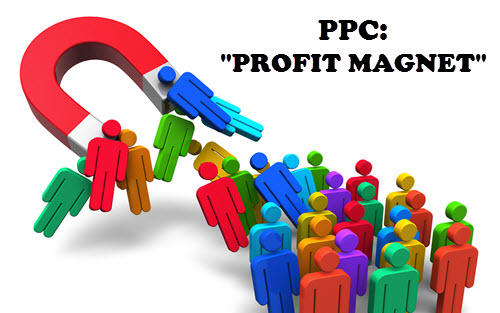
    Pay Per Click is awesome. Previously, I talked about how PPC can be a profit magnet for your business. One of the main reasons for that is that you can validate your research and marketing strategies very quickly. SEO is very important, and must be part of your online marketing strategy, but it’s not as fast typically.

    As an inbound marketing tactic for online business, Pay-Per-Click is a popular option. If you execute a PPC campaign(s) well, the effectiveness for you and the potentially massive amounts of data (clicks, bids, conversions, impressions) it provides – can be very valuable.

    You must know how to read the data, optimize for it – and make it actionable via (updated) changes.

    How can Business-To-Business Pay Per Click marketing work for you?

    Take 15 Free PPC Lessons For Google Adwords

    Google Adwords Learning Course Cert
    Is Google Adwords too difficult to use? But, you need it to build your online business?

    Outside of taking the time to learn (first), apply (second), stay up to date with all changes (third), and ongoing testing processes and tools (ongoing) – are you relegated to outsourcing the entire Adwords campaign management?

    The new updated Adwords Certification Program may be just what you need. (And, you don’t have to get certified if you don’t want/need to)

    What does the updated Adwords Training Curriculum cover?

    How To Get Better CTR (click-through) on Google Adwords

    better click through rates using adwords
    When running campaigns on Google Adwords, the higher the click-through rates are — the better. It impacts traffic, quality scores and overall engagement. You are rewarded for having better action and through-put. You win, and Google wins (charging you for those clicks).

    While ongoing testing and tuning is part of any marketers love (or nightmare) – nothing different with this solution offered from Google now. Google Product Listing Ads are now being made available to all of Google’s advertisers in the United States.

    You still have to test ads, keywords, but this system does make things a little simpler. Research and early results show that the CTR’s are being lifted much quicker by just implementing this new product offering from Google.

    How can you implement a product listing and description like the Cuisinart cookware example above?

    Watch this video.

    The Beginner’s Guide To Pay Per Click Marketing

    google adwords marketing for beginners
    As you have read many of the posts in this blog, you have learned that you can structure your site in a search engine friendly way, use SEO, and to build links for authority, trust and traffic. You also must be social (media) and write blog posts without paying for the results. However, this is not always the only solution for small businesses.

    It is often the case that small businesses do need to have a marketing budget for the web, too. It is unlikely that they will spend as much money in this form of advertising as they would in the offline world. Nevertheless, paid advertising online is an important part of search engine marketing.

    So, what is it?

    Pay per click advertising is just what it sounds like. Rather than just working for ranking in the search engines, which is done through all of the methods previously listed here, you will pay for ranking results.

    What are the basics to get started?

    Who Invented Money?

    Money GirlMoney!

    Love it or hate it, it’s a cultural-socio factor in all modern economies.

    But where did money come from, when was money invented – and how has it become such a force in society?

    The history of money is long and complicated – and incredibly interesting – but here are the basics.

    I believe the earliest known (not necessarily oldest really) forms of money are from Ancient Egypt. No paper money, just coins created from metals such as silver and gold, used as an alternative to barter – also probably used as symbols of high status. – Answerbag.com

    Why PPC Marketing Is The Profit Magnet For Your Business

    what is internet marketing and what does it mean to you When I think about the many opportunities that exist in internet marketing for

    … and with an awesome “speed to market”, there is no better than PPC (Pay Per Click).

    You can save your business a boat-load (I looked it up) of money, if you do it right. As the saying goes; “Every minute spent in planning will save you 10 minutes in execution”. Or, put another way – “every 1 dollar you spend in planning, will save you 10 dollars in loss”. When it comes to internet marketing and using the PPC platforms, this could not be more true. However, while it’s simple – it’s not easy.

    Pay Per Click can do this for you.

    Bing-Yahoo PPC: Start Your New Pay Per Click Here.

    Image representing Bing as depicted in CrunchBase
    Image via CrunchBase

    The initial rumblings, and then – the subsequent confirmation of Bing serving Yahoo’s search results is old news.

    And, as expected, the relationship has been tightened across not only organic results (already in place), but now pay per click (PPC).

    This latest news should concern you, – in a positive way. Bing’s Adcenter platform will show all paid search data and interfaces to both engines – via one account.

    What are the things to watch out for?

    How To Give Your Adwords PPC a Massive Boost: Try These 3 Easy Ways

    Danny Sullivan & His Panel "Ads In A Qual...
    Image by toprankonlinemarketing via Flickr

    PPC – Pay Per Click – the advertising model where you get charged each time someone clicks on your ad, is one of the fastest ways to drive traffic, leads and potential business your way.  Google’s job is to make this happen efficiently for you….or, wait… do they really do a great job?

    Which one of these are you:

    1. “Pay per click is easy, works great (and life is wonderful)”
    2. “Pay per click is a money-drain, losing money every day, too competitive now”
    3. “Pay per click is partially working for me, but quality leads of leads are not good”

    I’m here to tell you that Google Adwords – while getting competition from places like Facebook Ads (great demographic targeting!) – is still a good place for you to not only build online traffic, but “buy” invaluable marketing data. It can be the best thing you do before starting any SEO project, for example. But, there again – you have to do it right. (Hint: here’s how…)

    PPC In A Different World is Not Pay Per Click But Just As Important

    Stephen R. Covey en Bilbao
    Image by agirregabiria via Flickr

    The definition of PPC in search marketing circles is “Pay Per Click” – which is an advertising model, wherein a website and owner pays a set amount (bid price), whenever someone clicks on their ad. Google Adwords is such a business model, and mind you – representative of the biggest portion of Google revenue today.

    PPC can also mean:

    • “PowerPC” A range of processors developed by an alliance of Apple, IBM and Motorola
    • Petroleum Planning Committee
    • Program and Policy Coordination
    • Personal Programmable Calculator or Personal Programming Center
    • Pollution Prevention and Control

    When Google Feels Rotten – This Is What They Do

    I think that the depiction of the Google Slap (Google making long term Adwords quality adjustments behind the scenes without telling you, affecting your wallet) is too lightly described online.

    It feels more like this! (funny, but true story)

    ADDITIONAL RESOURCES:

    http://www.youtube.com/watch?v=K91bBYgrz1w (ClickBank Affiliates)

    How to avoid the Google Slap (SearchEngineJournal)

    Google Affiliate Auction Policy (Google Official)

    Why These 5 Adwords Tools Can Supercharge Your Profits

    licence google adwords

    Image via Wikipedia

    If you’re a beginner, some of these tools may be a handful at first. However, in truth, they are all chock-full of information and online support, so that shouldn’t hold you back. Pricing varies, but you can watch demos, take free courses and sign up for a trial.

    So assuming that you are comfortable with the Adwords web interface by now, you should advance to more productive tools.  They will get you to faster profits and save you tons of time.

    Please see below a list of Google Adwords Powertools you may not know about:

    1. http://www.adwordaccelerator.com/ (recommended). Issues solved:
    - get more visitors
    - find more affordable keywords
    - save tons of time
    - learn from your competitors
    - slash advertising costs
    - boost click-through rates
    - make adwords your friend

    Sign up and get some killer tips to improve your current campaigns. You can buy it for $37 a month. See the “buy” page here: http://adwordaccelerator.com/buy/. I have used this tool, and it’s pretty awesome. Recommended.

    2. http://www.speedppc.com/ (major timesaver – recommended) Issues solved:
    - time spent on PPC campaigns
    - competitive bidding
    - poor quality scores
    - low click-through rates
    - landing pages with low conversion rates
    - sky-high minimum bid prices
    - ineffective tracking

    You can sign up to get a free, seven-day e-mail course to help you on the right track. Have not used this, but it comes well recommended. And even though it’s costly, it can save you insane amounts of hours, specifically for larger campaigns.

    3. http://www.hexatrack.com/ Issues solved:
    - uncover profitable niches–super useful for affiliate work
    - legally spy on your competition
    - track and understand the top spots, their ad placements
    - R & D = Ripoff & Duplicate legally: Get the best money-making ads
    - track competitors’ ad copy and let them split test for you

    You also get built in keyword research tools, profitability scores, how many ads you are competing against and much more. Here’s a price comparison sheet: http://www.hexatrack.com/comparison-chart-new.php between free and paid.

    4. http://www.AdTextGenerator.com (recommended). Issues solved:

    - faster way to generate profitable campaigns in an hour (or less)
    - discover why most advertisers–you included–don’t do ads right
    - ads tested to dominate paid rankings for each and every keyword, matched into its own ad group
    - simple clicks of the mouse to generate your ads
    - uncovers what ads are already generating the highest click-through-rates
    - easily customizable; no need to ever write ads from scratch again
    - fast testing; find out what works quickly
    - incredible time savings

    Get your copy to slash your costs, boost your profits and save countless hours of time. (NOTE: Be sure to act fast.  You want to be the one using this tool against your competition . . . and not at the other end of the stick. I also beta-tested this tool, and the developers are over the top.)

    Lastly, don’t forget to use the free tool from Google, Adwords Editor, and learn the advanced ways in which you can upload and manage your entire campaigns. It’s a desktop power tool, and any serious Adwords manager must have this in his or her tool arsenal. Test these tools and get on the road to productivity today.

    Should You Drop Old Google Adwords Accounts?

    In 2004, while working at Yahoo, I started looking at the powerful options for paid search advertising. While it was just “play/research” at the time, I came to recognize the extraordinary solution Overture (originally Goto.com) had for targeting the visitor/searcher: “present a compelling, relevant advert at the time potential customers are looking for you.”

    While Goto/Overture was the innovator, it was actually Google Adwords that took this basic premise to the next level, in a big way: Offer similar functionality, but enhance the logic such that the ads with most relevant text and overall workflow (content and page quality, user experience) get awarded better or same placement on the page, at a lesser cost per click (CPC).

    I started diving into Adwords in earnest in January 2005 after an introduction by Perry Marshall, and I got hooked. That same year and into 2006, I started accruing some “age” to the Google Adwords accounts, my own and existing client accounts with some “history.”

    After spending much time researching and testing ads, keywords and landing pages, and working on bid management strategies, I found myself wondering whether old Google Adwords could be resurrected, or if they should be canned altogether.

    Then, after speaking with several friends, including AMKhan.com and my older brother, it became apparent that, after a certain threshold, an Adwords account with poor history (not optimized from the outset) could never become successful. I define successful as the ability to positively impact the algorithm to make it work for you, not against you.

    Chief Takeaway:
    If you are spending time trying to improve quality and nothing works, drop the entire Adwords account and start fresh.

    Here are some tips for optimization after drop and re-creation:

    1. Turn off Content Network (at least initially, until testing proves otherwise).
    2. Match keywords tightly to adgroups. No more than 10 keywords per adgroup.
    3. Ignore broad match type, use phrase and exact keyword matching, and review your negative matching types.
    4. Include keywords in ad text: title of ad + body text of ad.
    5. Create custom, keyword-rich landing pages; don’t use home page. Think traditional SEO onpage factors when developing.
    6. Apply Google Analytics (free) across all pages, and specific conversion code on your “thank you” pages.
    7. Split test (A/B) ads, always.
    8. Split test (A/B) landing pages, using Google Web Optimizer (Adwords account is all you need) and apply simple scripts.
    9. Advanced: Use sectional, multi-variate testing for inline elements on pages. (Don’t start with this unless experienced).
    10. Use “placement targeting” for laser-sharp page/site positioning, and lower click acquisition costs on pages where customers live. Use the Adsense Finder to easily discover them, and save hours of work trying to do this manually.

    Don’t Be Foolish: Quick Tip Money Savings for Google Adwords

    This post is about saving money, specifically for you and your Google Adwords expenditures.

    Adwords Money Saving Piggy Bank
    Many are not familiar with the powerful new approach that Google introduced in its paid-click model (pay-per-click advertising). While Goto/Overture was the pioneer by introducing paid search initially (paid advertising, sponsored links), Google came on the scene about 2002 and introduced a different “smart reward” system for performance-based ads management and relevancy of overall bidding, keywords and user experience.

    This new, enhanced system allowed the engine to not only allow a bid to position ranking, but to use its own (secret) software-tailored intelligence to improve cost per click by ranking you better than your competition, at a (if done right) lower cost. If your competitor was paying $2 per click for a keyword, for example, you could pay less ($1.50, say), and still be ranked ahead of the competition.

    While the current Quality Score (QS) was introduced later and improved over time, it is an important component of the Adwords system today. It is something you should try to understand and apply across all your current accounts.

    The Quality Score algorithm in Adwords (search ads and search network are slightly different) is not revealed for obvious reasons (spamming/black hat), but allows ads you create to lift into better positions (ad rank) and lowered price per click based on a few factors you can easily control–or at least try to make “least imperfect.”

    Top factors that influence positive, money-saving opportunities using Adwords:

    • Keyword use and relevancy in ad creative (ad text);
    • Tight adgroup matching to content/keywords (Do not dilute with lots of keywords that are not related);
    • Landing page copy and keyword relevancy from bid (the Google Adsbot reads and records keywords on page, similar to Google Bot);
    • Minimum keyword bid;
    • Ad positioning, monitoring; and
    • Click-through rates (CTR) and overall performance history across your campaigns.

    Please read further quality scoring resources below, but here are the top three quickest ways to affect your budget and performance:

    1. Keyword matching in title of ad, included in body as well (derivative keyword, plurals, etc). Don’t miss this.
    2. Ensure keyword(s) are included and reflected early and often in landing page text, including SEO compliant page setup (Title, description, H1 tags, related keywords in body content, etc). Include more than just graphics and a few bullet points.
    3.
    Watch your CTR percentage and tune it upward by creating A/B ads and testing their performance. Remove or pause underperforming keywords; they can affect your QS negatively.

    Your competition may be using techniques like these already. Study their landing pages as well, including keyword use for relevancy. Then do all this slightly better, and you will win, while optimizing your Google Adwords budget. Make sure not only to optimize for Google, but learn the best practices for high landing page conversion by reading further materials at MarketingSherpa.

    Adding links and pages About Us, Contact Us, Privacy Policy, SiteMap and SSL certificates for secure transactions are included as positive QS parameters for all landing pages.

    You can review your Quality Score grade right inside the Adwords system:

    Google Quality Score Selection

    Additional Resources:

    1. What Google Quality Score is–and is not
    2. Quality Score for Google and network
    3. How is the Google Quality Score calculated?
    4. Landing pages’ load time will be included in Quality Scoring Adwords

    MSN & Yahoo resources also:
    1. MSN Quality Scoring
    2. Yahoo Quality Scoring/Index

    Lastly, to manage the Google Adwords system, save yourself tons of time. Read up on the Adwords Editor features and download it today (it’s free).

    SEO or PPC? Things you should know before choosing.

    These days, it seems not a day goes by without somebody asking me if Pay-Per-Click (PPC) or Search Engine Optimization (SEO) should be used online, and why one may be better than the other.

    Search Engine Optimization is the applied practice of moving your website to elevated positions in the search engines. PPC  is an advertising medium you pay for and another way you can get a premier, top page listing in less than 10 minutes. Yes, you could potentially present your product or services millions of people, depending on your budget and targeting options – that quickly.

    Where do you start?

    Ideally, you should use both. Think about the power and business opportunity of ‘owning’ the search engine display, where you are listed not only in the top natural results, but on the paid search side as well. Great for brand recognition too!

    Let’s step back for a moment. As seen in a previous post, users of search tend to click more on natural search results than the paid listings. The acute awareness of what paid search is, exist among the user communities now, especially on Google.

    The trust factor is higher in the SERPs and some users even find that paid ads are a nuisance. And, with Pay Per Click costs rising, and becoming very competitive and especially high priced during holiday seasons, no wonder many look to SEO as their online traffic solution.  Some even feel that relevancy is higher in the natural listings, swaying decisions to choose SEO as their starter option.

    Business owners who focus on organic/natural results also know that, if done right, they are building a real business asset, by creating free traffic, and providing a more long term effect. Of course, search engine algorithms change often, and business owners need to stay on top of them.

    The immediacy of paid search is a fantastic “results-driven” opportunity. You can create a brand new account, add some keywords, set the targeting, relevant ad text and landing pages and be up and running in 10 minutes. You can use tracking software to see results very quickly, even that same day.  For example, if you have an event you are pushing, you can run it for a limited time, and tell the system start and end dates, including what times during the day, if you wanted to.

    Paid search helps you control your spending, so for small business it may be a good option. You may not have a professional SEO individual in-house, and it can get expensive to hire an outsider (if they are any good).

    Recently, I set up a Google account for a business owner in the business-to-consumer (B2C) space. We did it over the phone in 10 minutes, and after credit card and verification emails were sent, the account was ready. This particular business wanted to learn how to run a campaign in-house using PPC. To most, it’s a much more approachable option than SEO.  I help with keyword research, and they write the ads, and they could launch within 5-10 days. Then, with analytics scripts and good landing page designs and conversion tactics, they can have a “web leads engine” developed rather quickly.  It worked for them, but they are/will be looking into SEO as well.

    But, PPC has issues with click fraud, and it can get expensive if you don’t do the upfront keyword research correctly, and proper bid analysis and management, as well as applying known tactics for optimal quality scoring.

    If you use PPC and SEO wisely, they both can make sense for your business. It depends on your industry, budget, timelines and your own dedication.

    P.S.
    Oh, and the data you can capture from PPC campaigns, may help you to optimize your SEO programs, by watching keyword impressions, popularity and more. Always test!

    About Small Business Web Tips & Jon Rognerud

    I am a lumber-jack-turned-Google-Entrepreneur. I grew up in Scandinavia, and spent most of my time hauling timber, fighting frigid temperatures and playing my guitar. When I came to the USA over 25 years ago, I started with nothing. I knew how to play the guitar and had dreams to become a rock star. However, with little cash and working multiple jobs, from cold calling to selling vitamins in a small store in Hollywood, the future was dark. It didn't help that I was alone, and missed my family and friends terribly. I planned to return home after a few months, but by stroke of luck (or stupidity) I interviewed with a technology company. A friend recommended I do that, but it was above my skill set and desire at the time. But I stuck with it, and slowly learned to program in a computer language and began helping people and companies with software applications and database problems over the phone.

    Today, I am a full-time Internet Marketer, published author, online trainer, inspirational speaker, business coach & strategic business consultant for multi-million dollar businesses online. More on Jon Rognerud

    © 2012 Jon Rognerud | Made by Guerrilla | RSS | Privacy & Terms | Sitemap | Los Angeles, California

    Socialize With Me


    As Featured In...
